
The Cardinal Story
All the Bright PlacesThis thread traces Finch’s childhood memory of a cardinal and the way its death shapes his beliefs about care, helplessness, and leaving.
increasing Bearing strength in each event
 decreasing
Bearing strength in each eventdecreasingThe Bird at the Glass
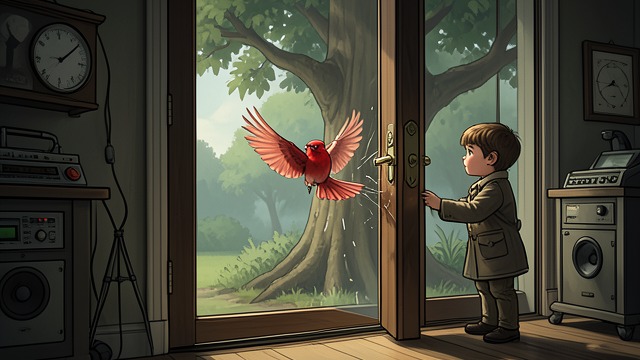
The Bird at the Glass
Repeated impact
As a child, Theodore Finch watches a cardinal repeatedly fly into his family’s glass doors. He begs his parents to let the bird inside so it will be safe.
A child’s theory of care
Finch believes the bird would survive if his family protected it. The adults explain that it may be trying to reach a tree that was removed when the house was built.
The memory introduces the painful limits of rescue and human understanding.
The Mud Nest
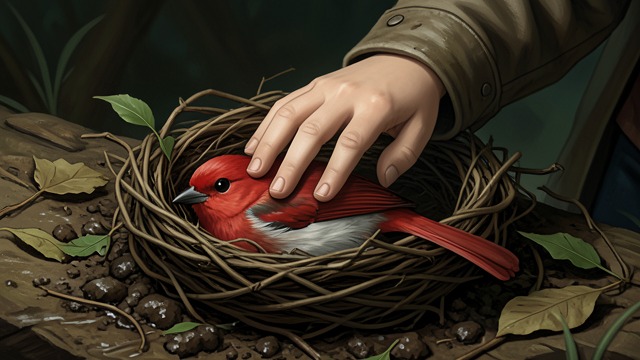
The Mud Nest
Finding the body
The cardinal dies after another collision with the glass. Theodore Finch and his family bury it in a small mud nest.
Responsibility remembered
Finch later believes his family might have saved the bird if they had let it inside. He carries the event as an early lesson that someone’s death may feel like a preventable failure.
The story foreshadows his later struggles with guilt and rescue.
The Story Repeated
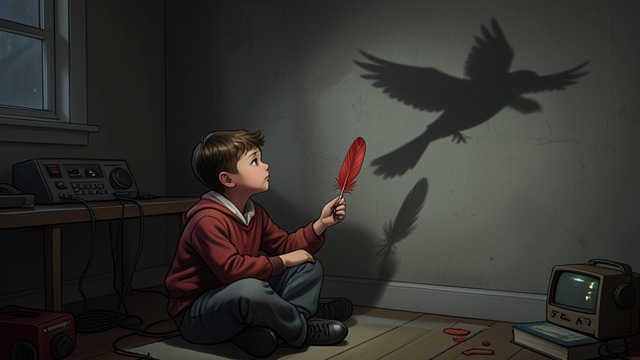
The Story Repeated
A familiar account
Theodore Finch tells Violet Markey that he blamed his parents for the cardinal’s death because they could have let it into the house.
A pattern exposed
Violet hears the story alongside his retreat into the closet and his belief that he must manage his moods alone. The childhood loss has become a way of explaining his fear that care is always too late.
The repetition reveals a lasting wound without proving that one event caused his illness.
The Rescue Question
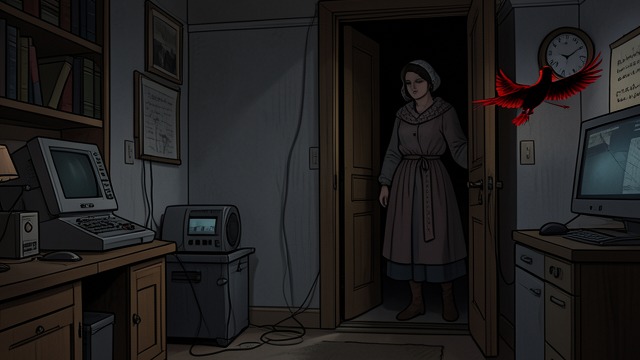
The Rescue Question
Echoes in Violet’s grief
After Theodore Finch dies, Violet Markey wonders whether she could have noticed more or said something different. The cardinal story gives her a parallel for that guilt.
Limits of responsibility
The novel does not confirm that either death could have been prevented by a single person’s action. It shows why survivors keep searching for the moment they might have changed.
The story invites compassion without turning grief into a verdict of blame.
A Memory Reconsidered
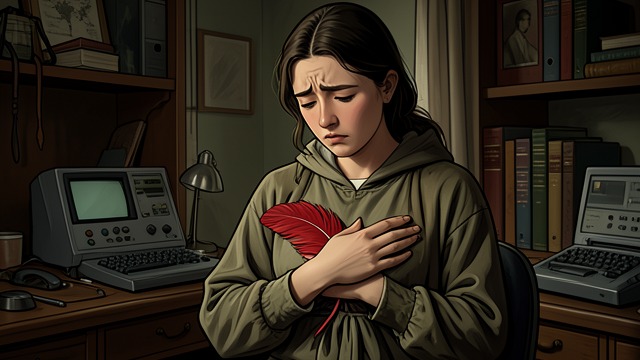
A Memory Reconsidered
Seeing the pattern
Violet recognizes how Theodore Finch carried the cardinal story as proof that people can fail to protect someone they love. She begins to distinguish that belief from fact.
Care without omnipotence
The remembered bird does not offer an answer for Finch’s death, but it clarifies why guilt can feel persuasive. Caring matters, yet it does not grant total control over another life.
The motif deepens the novel’s challenge to survivor blame.
Finch’s childhood, recalled in January
After the cardinal’s final collision
March, while Violet visits Finch’s closet
May, after Finch’s death
Late spring, during the final wanderings
